Thirty Years Later: Remembering What the Atlanta Bombings Took, and What They Taught
On the morning of July 27, 1996, I woke up in a lake cabin in Eastern Ontario, still weeks away from starting my career at the ATF's forensic laboratory in Atlanta. The television news was reporting an explosion at Centennial Olympic Park, a low-security venue built to give visitors to the Games a place to gather and celebrate.
By the time events had fully transpired, more than a hundred people had been injured, and a woman named Alice Hawthorne, 44, was dead, killed by a nail-packed pipe bomb while sitting at a concert with her daughter. A second victim, a photojournalist from Turkey, collapsed and died of a heart attack while running toward the chaos.
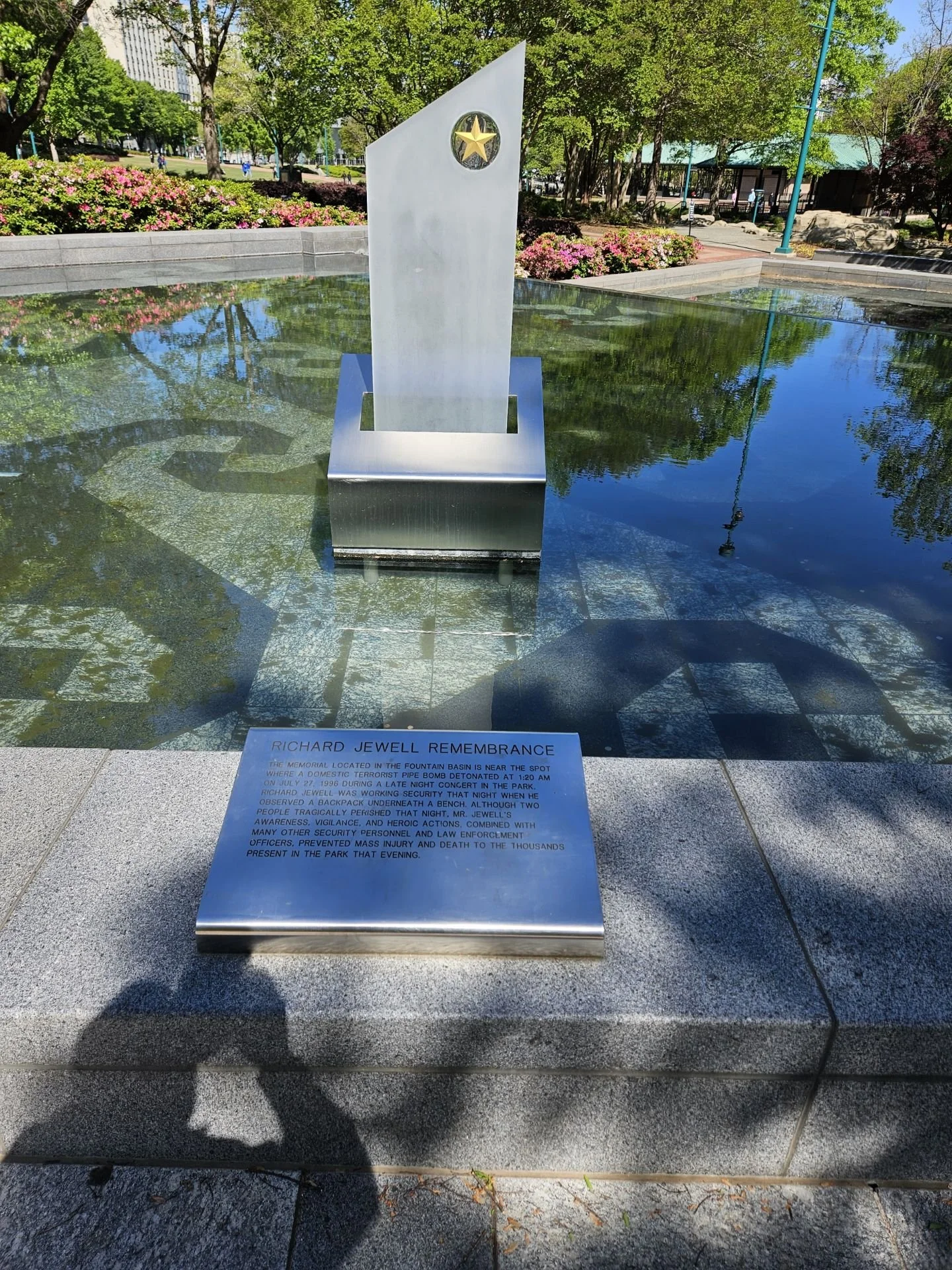
A tribute to Richard Jewell located at Centennial Olympic Park in downtown Atlanta, the site of the July 27th bombing of the 1996 Summer Olympic Games. Photograph by Mike Bott.
Thirty years on, it is worth pausing to remember not only what was lost that night, but what was asked of the people who spent the next two years trying to stop it from happening again.
I would join the investigation that fall, assigned to one of the laboratory's technical units. Along with another colleague who mentored me, I was responsible for examining thousands of nails recovered from bomb scenes over the next eighteen months.
I did not know Alice Hawthorne. I did not know Robert Sanderson, the off-duty Birmingham police officer killed instantly in January 1998 while approaching a package outside a women's clinic where he worked security. I did not know Emily Lyons, the nurse who survived that same blast with injuries that, by any reasonable expectation, should have killed her. But the names of these victims were written on evidence labels that passed across my workbench, and in the strange intimacy of forensic work, that is its own kind of knowing.
A bent nail in a plastic envelope, marked with Hawthorne's name, was among the first pieces of evidence from the Olympic bombing that I examined. There was no established protocol in American forensic science for what to do with it. We had to build one as we went.
What struck me then, and stays with me now, was the gap between the scale of the harm and the ordinariness of the people who caused and suffered it.
Eric Rudolph built devices sophisticated enough to draw suspicion of military training, yet the manhunt that eventually identified him turned on unglamorous, patient work: comparing microscopic toolmarks on bomb nails to specific production batches, tracing those nails to specific manufacturing runs, and understanding how the machines that made the nails leave traces that forensic investigators like me could use to find the bomber. None of it looked like the movies. It was slow, exacting work, driven by the fear that another bomb was already being built.
The colleague and mentor I mentioned taught me, at the exact moment we found the first forensic link between Rudolph and the Olympic bomb, something that would inform my sense of professional integrity from that point forward — that the discovery of compelling evidence is not the same as proof, and that justice professionals have an obligation to understand the difference before they suggest that it is. That lesson has outlasted the case itself, and I still teach it to students in my expert-witness training workshops.
The investigation exacted its own toll on the people conducting it, though rarely in ways that made the news. Agents rotated through our command center for weeks or months at a time, chasing leads phoned into a public hotline, aware that the bomber remained at large and might strike again at any moment, including at the very buildings where we all worked.
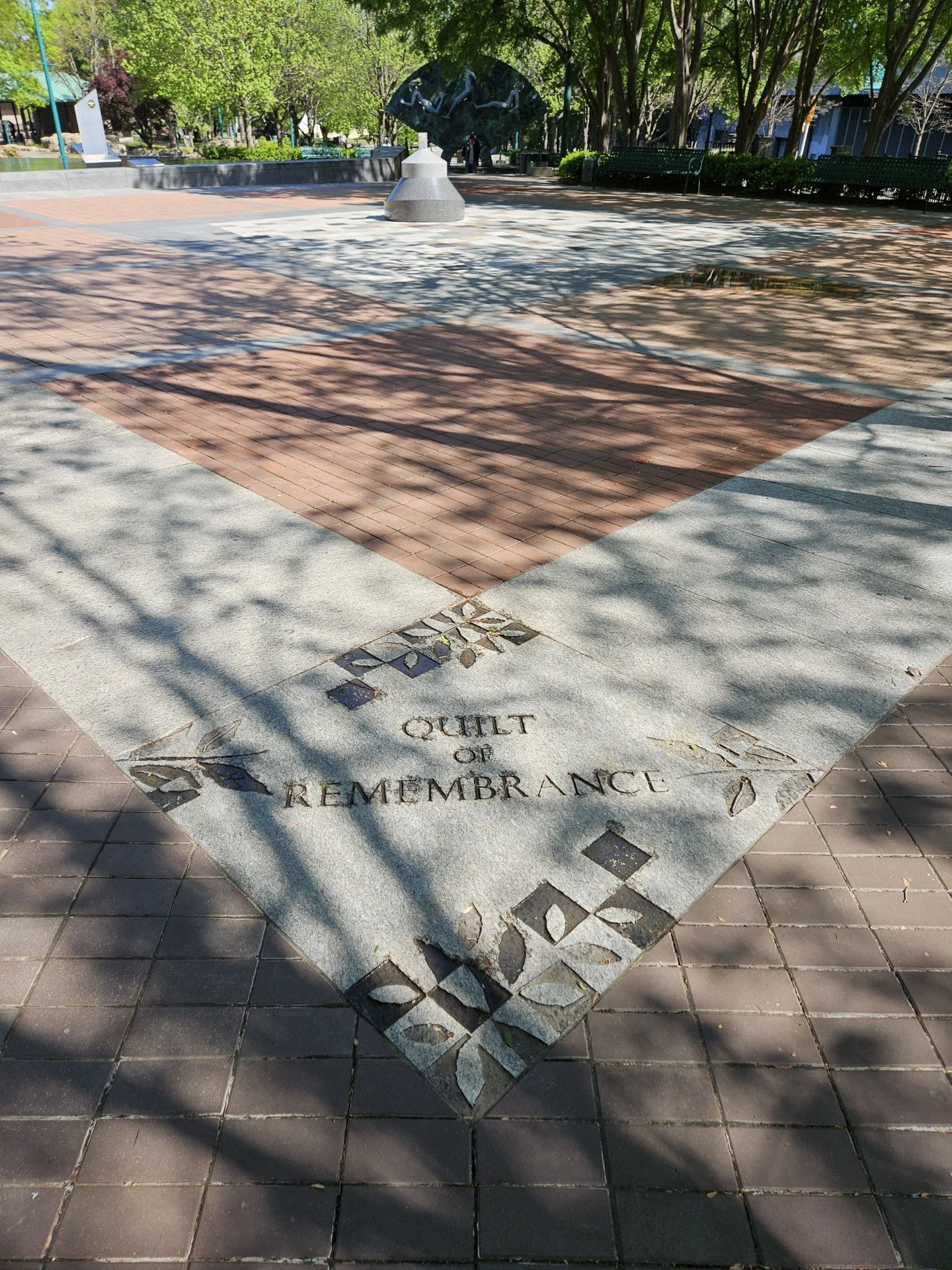
The Quilt of Remembrance at Centennial Olympic Park, Atlanta — a memorial to Alice Hawthorne and the more than 100 others injured in the July 27, 1996 bombing. Photograph by Mike Bott.
An unfortunate rush to judgment cost Richard Jewell his reputation and, in the eyes of many who worked the case, delayed the real reckoning. When Rudolph was finally tied to the crimes through nail comparisons and physical evidence recovered from his property, it validated years of painstaking laboratory work that had proceeded without any certainty it would ever matter.
Thirty years is enough distance to separate the memory of these events from the noise that once surrounded them. It was one of the largest domestic manhunts in FBI history. But it was the simplicity that brought the most pain.
Alice Hawthorne went to a concert with her daughter and did not come home. Robert Sanderson went to work and never saw his wife and two stepsons again. Emily Lyons survived catastrophic injury and chose to speak publicly about what that day cost her, her family, and her colleagues.
But behind them all stood scientists like me, agents, and officers who spent many months piecing together a case one piece of evidence at a time, understanding that the credibility of our conclusions would certainly matter as much as the conclusions themselves.
I do not believe Eric Rudolph deserves any serious consideration in how this anniversary is remembered. The people who deserve our thoughts are the ones who lost their lives, the ones who lived through unimaginable pain but chose to press on in spite of it, and the members of the investigation team who gave years of their careers to make sure the public knew what happened during those two years in Atlanta and who was responsible.
Somewhere locked in an evidence vault, a plastic envelope containing a nail still bears Alice Hawthorne's name and my initials. I have yet to put it down.
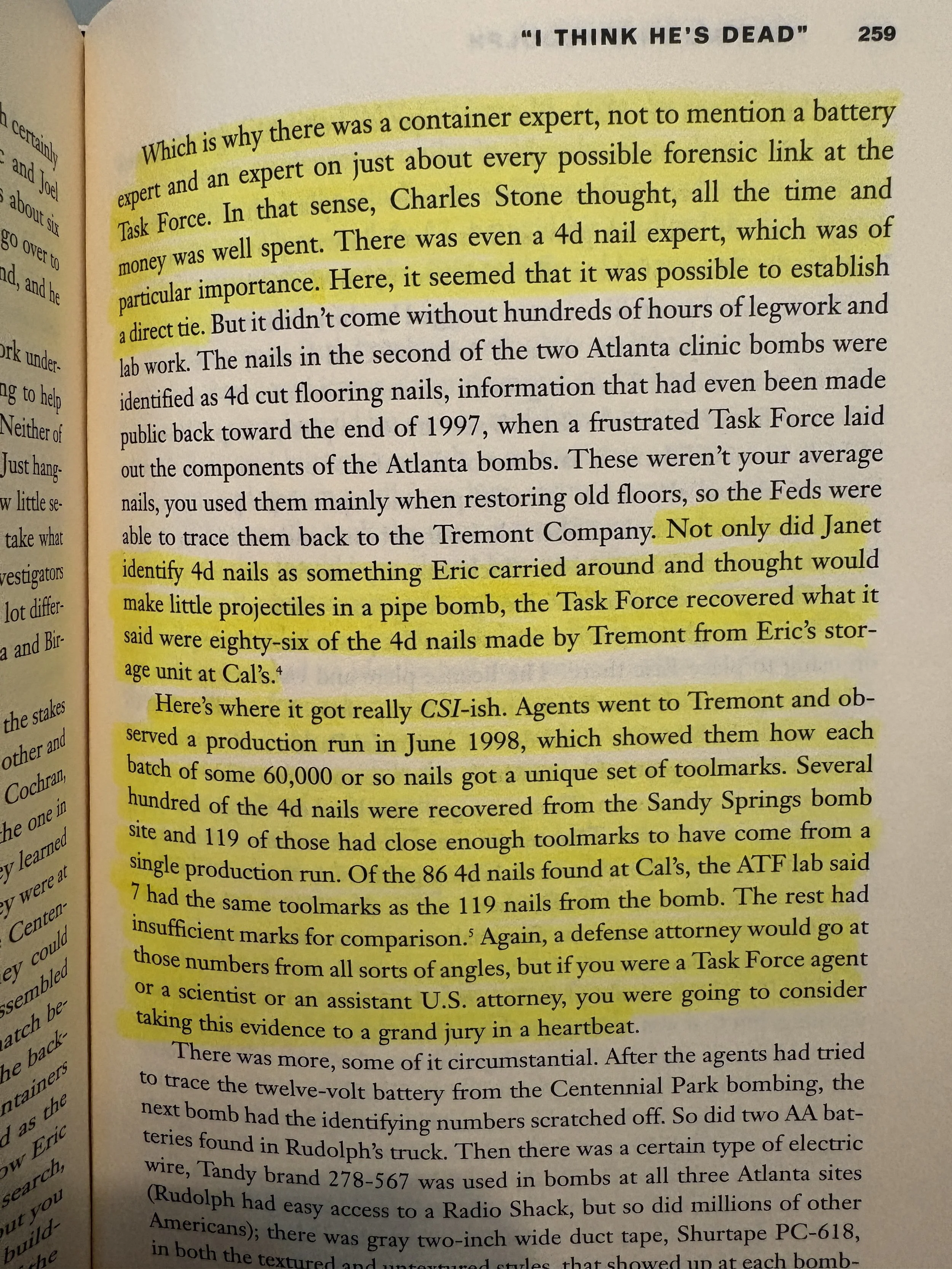
I was the “4d nail expert” described by Henry Schuster and Charles Stone in their book, “Hunting Eric Rudolph - An Insider’s Account of the Five-Year Search for the Olympic Bombing Suspect.”
